Q-Plex
925 Mercedes St, Albany GA
34 Units · 204 Beds · 2.02 Acres
by North Star Group
1. Strategy
High-level approach to the Q-Plex student housing development.
Satisfy student housing demand near Albany State University.
Albany State has 6,800+ students. Approximately 40% live on campus, leaving 4,000+ needing off-campus housing. All 11 residence halls have been at 100% capacity for three consecutive years. The university has housed students in hotels at its own expense.
Our 204 beds represent approximately 5% of off-campus demand.
Details in Market section.
34 units / 204 beds maximizes density within zoning constraints confirmed by the planning director.
- 8 quadruplexes (32 units / 192 beds)
- 1 duplex (2 units / 12 beds)
Details in Zoning section.
Two-story wood frame in South Georgia costs $35,000-$48,000 per bed — roughly half the national student housing average of $74,000-$98,000, which reflects mid-rise concrete construction in major metros.
Details in Budget section.
Build quality depends on the owner's purpose for the property.
If the goal is long-term cash flow, economy build maximizes short-term returns. Lower construction cost means lower debt service and higher monthly cash flow.
Trade-off: Economy finishes don't command premium rents and may hurt resale value.
If the goal includes eventual sale, optimized build costs more upfront but commands premium on exit. Buyers pay more for properties with smart systems, energy efficiency, and quality finishes.
Trade-off: Higher construction cost means slightly lower cash flow during hold period.
Sweet spot: Optimized build quality that balances cash flow and exit value. Slightly less cash flow during hold, but exit premium more than compensates.
This is a decision point for the owner.
Contracting structure affects cost and risk. Each tier down reduces price and moves risk to owner.
Full-service general contractor with performance bond. Bonding company guarantees completion if contractor fails.
| Risk | Lowest — bonding company backstop |
| Cost | Highest — GC markup + bond premium |
| Requirement | GC with sufficient bonding capacity (~$6M for this project) |
GC performs work, owner procures materials directly. Saves 15-25% markup on materials.
| Risk | Low — materials on-site belong to owner, quantifiable |
| Cost | Moderate savings — material markup eliminated |
| Requirement | Procurement expertise, staging logistics |
Experienced local GC, no bond requirement. Widens contractor pool to include qualified smaller firms.
| Risk | Medium — completion risk, mitigated by progress payments |
| Cost | Good savings — no bond premium, smaller firms compete |
| Requirement | Strong references, pay only for completed work |
Risk mitigation: Progress payments only for completed work. Owner holds materials on-site. If contractor walks, owner is not upside down.
Licensed contractor pulls permit and provides oversight. Owner contracts subcontractors directly. D.R. Horton model.
| Risk | Higher — requires strong field supervision |
| Cost | Best savings — no GC markup on labor |
| Requirement | Licensed GC for permit, dedicated superintendent, CM oversight |
North Star role: Tim Hall reviews contracts, interviews subs, oversees quality. Jey Smith coordinates schedule and payments. Hired superintendent handles daily field supervision.
Construction method affects cost comparison between tiers.
| SIP Construction | R-40+ walls, 40-60% lower utility costs, consistent performance |
| Stick Frame | R-13 walls, wider contractor availability, variable performance |
SIP material cost is higher; labor cost is lower. Net difference depends on procurement strategy — manufacturer relationship, regional supplier, or national distributor.
This is a decision point for the owner.
Systems that save money, improve safety, and reduce operating costs regardless of ownership strategy.
Gas tankless water heaters, Home Assistant automation, circuit-level energy monitoring, electronic locks with audit trail.
Details in Optimization page.
Intelligent scheduling of non-critical loads to reduce peak utility costs. Example: dishwashers run at 7pm after afternoon A/C demand subsides.
Implementation depends on economic feasibility for this project.
Local LLM via Home Assistant. Tenants interact through phone app for voice/text control, maintenance reporting, policy questions.
No recurring API costs. Adds operational efficiency and tenant satisfaction.
Generator per building sized for full load. All units operational during outage. Automatic transfer switch.
Gas water heating reduces generator sizing significantly.
The property is 0.7 miles from Albany State University.
| Distance | 0.7 miles |
| Drive | 3 minutes |
| Walk | 16 minutes |
| Bike | ~5 minutes |
| None | Students provide own transportation |
| Shuttle | Van service every 7-15 minutes during class hours |
| Bikes | Regular or e-bikes available to residents |
| Hybrid | Shuttle for peak times, bikes for flexibility |
Providing transportation adds cost but increases attractiveness versus competition. "Free shuttle to campus" is a marketing advantage.
Not all students need transportation at once. Class schedules are staggered.
This is a decision point for the owner.
Project assumes private dollars per owner's indication.
The owner has indicated this project will be financed with private capital. No grants or public financing currently planned.
North Star can provide a funding strategy if desired, including:
- Grant opportunities (HUD, state housing programs)
- Tax credit programs
- University partnership structures
- Alternative financing arrangements
This has not been requested. Available if the owner's financing strategy changes.
2. Property
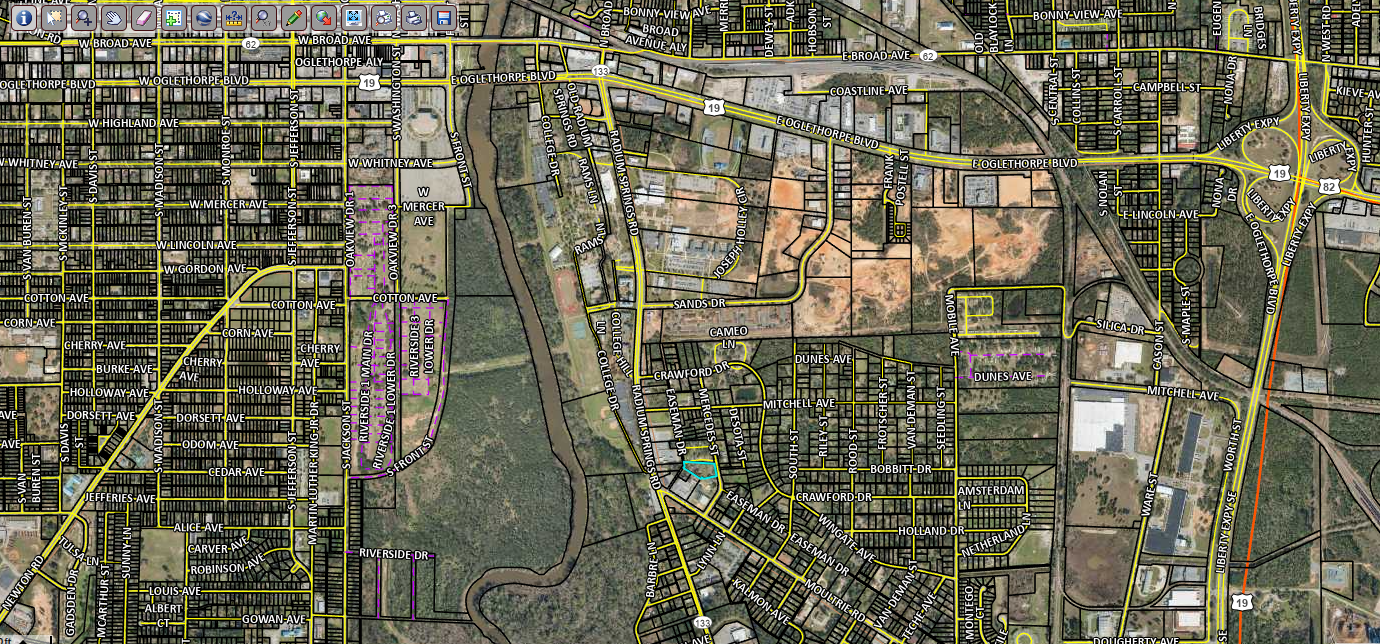
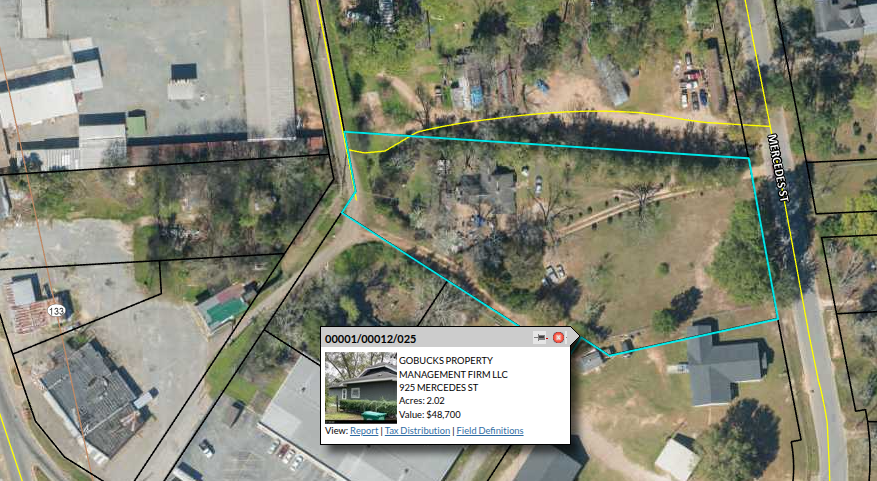
A 2.02-acre parcel on Mercedes Lane in Albany, Georgia, directly across from Albany State University.
Address: 925 Mercedes Ln, Albany, GA 31705
Parcel ID: 00001/00012/025
Size: 2.02 acres (87,912 SF)
Frontage: 216 ft | Depth: 407 ft
Owner: GoBucks Property Management Firm LLC
Existing: 1929 residence, 1,600 SF, 3BR/2BA (to be demolished)
Distance to Albany State University: 0.7 miles (across the street)
Neighborhood: Dixie Heights residential area
Access: US-19 corridor, downtown Albany
Topography: Generally flat
Lot Shape: Rectangular
Floodplain: None
Traffic Study: Not required
City of Albany sanitary sewer. No restrictions confirmed by Planning & Development.
City of Albany municipal water available. Tap fees to be confirmed during due diligence.
Georgia Power serves this area. Service capacity to be verified.
Atlanta Gas Light provides natural gas in Albany.
Stormwater management per City of Albany standards. Flat site; retention/detention requirements to be determined.
Service providers and property-wide WiFi options to be evaluated. Student housing typically requires robust connectivity.
High Altitude
Low Altitude
📄 Download County Property Report (PDF)
Dougherty County qPublic report for Parcel 00001/00012/025
3. Zoning
C-R zoning permits 34 units. Planning director confirmed no restrictions on sewage, traffic study, or flood plain.
Current Zoning: C-R (Community Residential)
Legacy Code: R-6 (renamed to C-R during ordinance update; GIS data not updated)
Multifamily: Permitted by right
Source: Landowner's representative spoke directly with Albany Planning and Development director, December 2025.
Per correspondence from the landowner's representative:
| Sewage | No restrictions |
| Traffic Study | Not required |
| Flood Plain | None |
| Height Limit | 2.5 stories |
| Density | 40 units max, 34 practical (after setbacks and parking) |
| Parking | 2 per unit required; 1.5 variance will be approved |
| Lot Coverage | 65% maximum |
| Existing Structure | House on property to be removed |
Configuration that maximizes density within confirmed limits:
| 8 Quadruplexes | 32 units × 6 beds | 192 beds |
| 1 Duplex | 2 units × 6 beds | 12 beds |
| Total | 34 units | 204 beds |
Parking: 51 spaces (34 units × 1.5 at variance rate)
Site Area: 2.02 acres (87,991 SF)
65% Coverage Allowed: 57,194 SF
| 8 Quads | 8 × 3,300 SF footprint | 26,400 SF |
| 1 Duplex | 1 × 1,650 SF footprint | 1,650 SF |
| Buildings Total | 28,050 SF | |
| Parking | 51 spaces × 160 SF | 8,160 SF |
| Total Developed | 36,210 SF (41%) | |
| Green/Open Space | 51,781 SF (59%) |
Site Layout:

| Units | 34 (max 34 practical) | ✓ |
| Height | 2 stories (max 2.5) | ✓ |
| Coverage | 41% (max 65%) | ✓ |
| Parking | 51 spaces at 1.5 variance | ✓ |
| Sewage | No restrictions | ✓ |
| Flood Plain | None | ✓ |
| Traffic Study | Not required | ✓ |
Open Item: Formal 1.5 parking variance approval (planning director indicated this will be approved).
4. Market
Market analysis for student housing near Albany State University.
| Total Enrollment (Fall 2024) | 6,809 students |
| Undergraduate | 6,192 (90.9%) |
| Graduate | 617 (9.1%) |
| Gender Ratio | 73.8% female / 26.2% male |
ASU has experienced enrollment growth for three consecutive years. Spring 2024 enrollment increased 3.3% over the prior year.
Sources: Wikipedia (IPEDS data), US News & World Report, ASU News Release (2024)
Residence Halls: 11 halls across East and West campuses
New Construction: 64-bed Residence Hall 7 opened August 2025 ($8.8M, 30,682 SF) for honors students
First-Year Beds Reserved: Approximately 1,200 beds
| Hall 1/2 | 4-bedroom suite, private room/shared bath |
| Hall 3/4 | 4-bedroom apartment style |
| Hall 5/6 | Suite style, various configurations |
| North/East/South | Traditional 2-room units |
| West Commons | 2-bedroom suite, private bath |
| West Village South | 2-bedroom suite, private bath |
Sources: ASU Housing Website, ASU News (Oct 2024, Aug 2025)
Documented Shortage: For three consecutive years (as of 2019), all available rooms in eleven residence halls were filled to capacity.
Waitlist: Active waitlist for Fall 2025. ASU states: "Due to the high demand for on-campus housing, we are unable to guarantee you a room."
Overflow Housing: University has housed students in temporary off-campus hotels at university expense.
University Response: "University officials are exploring partnerships with the Albany community for plausible solutions to address the high demand for on campus housing for the future." — ASU President Marion Ross Fedrick (2019)
Sources: ASU News Release (2019), ASU Housing Waitlist Page (2025)
Available Inventory: Approximately 95-129 rental properties listed near ASU
Property Types: Apartments, townhouses, shared rentals, mobile homes
College Park Apartments — Student-focused community within walking distance of ASU West Campus. Pet-friendly (dogs/cats with restrictions, 35 lb limit, $300 fee + $30/month).
Legacy House — 905 Colquit Circle. Rooms for rent, 4BR home near West Campus.
Various shared houses — ASU maintains an off-campus housing list with properties offering $675-$715/month rooms with utilities included.
Sources: Apartments.com, ASU Off-Campus Housing Page, CollegeStudentApartments.com
On-Campus Rates (2025-2026, per semester):
| North/East/South (Traditional, shared) | $2,240/semester ($498/month) |
| Hall 1/2 (Suite, private room) | $3,093/semester ($687/month) |
| Hall 3/4 (Apartment style) | $3,452/semester ($767/month) |
| West Commons (Private bath) | $3,519/semester ($782/month) |
| West Village South (Premium) | $3,743/semester ($832/month) |
Off-Campus Market:
| Average student housing | $650-$800/bed/month |
| Shared house room (utilities included) | $675-$715/month |
| Low-end rentals | Starting at $509/month |
| Average apartment near ASU | ~$1,006/month |
Sources: ASU Housing Rates Page, RentCafe, CollegeStudentApartments.com
National student housing research indicates priorities for this demographic:
| Top Priority | Affordability with private bedroom |
| Functional Amenities | Wi-Fi, laundry, utilities, dishwasher, parking |
| Lower Priority | Pools, fitness centers, hot tubs |
| Location | Proximity to campus, mixed-use developments |
34% of undergraduates and 38% of graduate students earn less than $20,000 annually. Affordability is the primary driver.
Sources: Research.com Student Housing Trends (2025), Pew Research Center
Dougherty County Schools: 13,059 students across 22 schools. District graduation rate is 90%, above Georgia state average (87.2%).
Georgia HBCUs: Albany State, Fort Valley State, and Savannah State are peer institutions in the University System of Georgia. ASU has shown enrollment growth while some peer HBCUs experienced declines.
National Trend: HBCUs are seeing increased admissions. Schools like Albany State, Fort Valley State, Alabama A&M, and Morgan State reported higher enrollment for 2024-2025.
Sources: Public School Review, Georgia DOE (2025), ClutchPoints HBCU News
Georgia Public HBCUs:
| Albany State University | 6,809 students | Room & board: $9,066/year |
| Fort Valley State University | ~2,624 students | Room & board: varies |
| Savannah State University | ~2,945 students | Room & board: $7,762/year |
Albany State is the largest of Georgia's public HBCUs by enrollment and has experienced consistent growth. Fort Valley State ranks as #1 public HBCU in Georgia per U.S. News for six consecutive years, though Albany State has larger enrollment.
Sources: HBCU Money Guide, Niche, U.S. News & World Report
5. Product
Physical configuration and systems for 204-bed student housing near Albany State University.
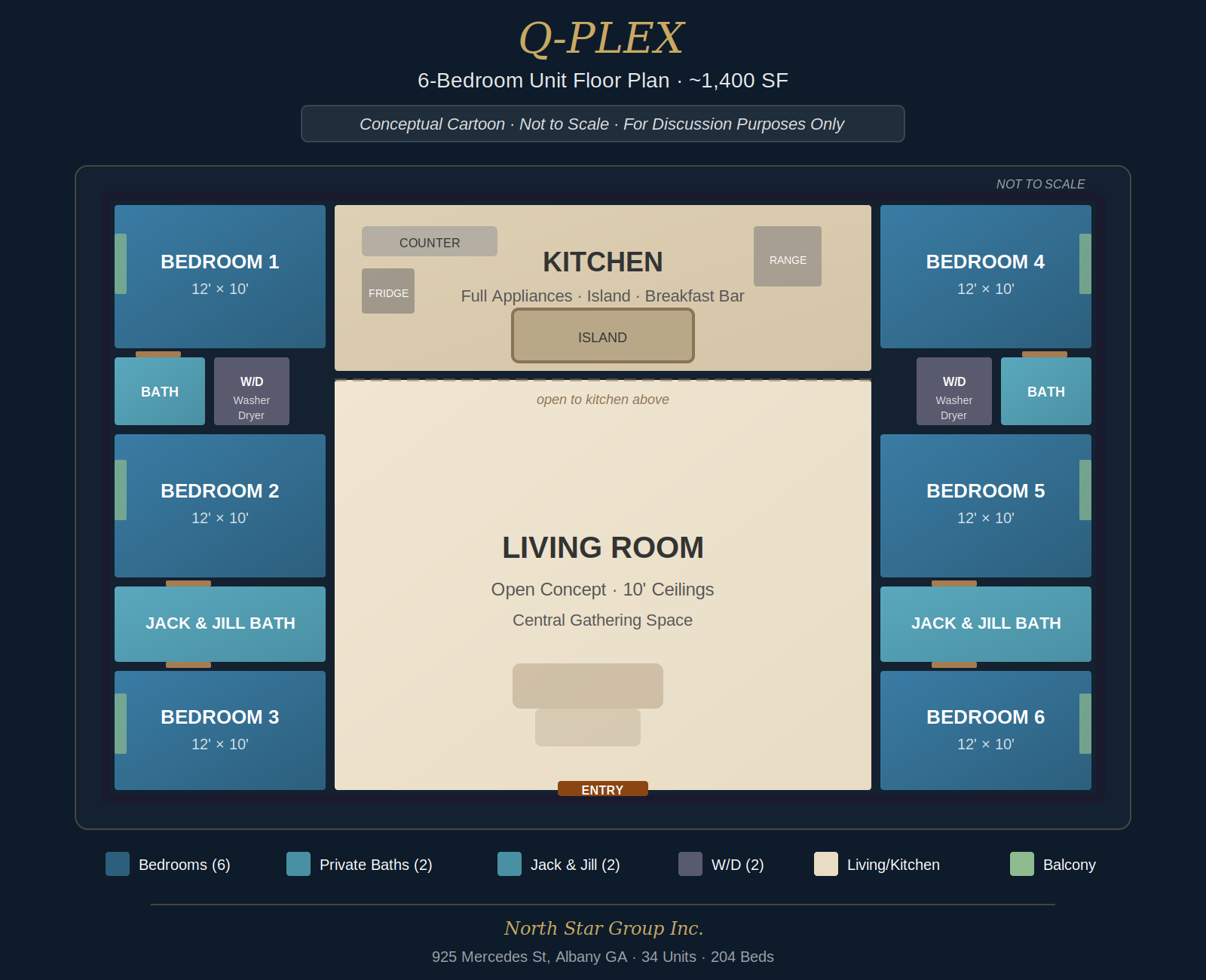
Each unit houses 6 students in private bedrooms with Jack & Jill shared bathrooms. Open kitchen and living space in center.
- 6 private bedrooms (3 left wing, 3 right wing)
- 3 Jack & Jill bathrooms (shared between bedroom pairs)
- Open kitchen and living area (center)
- 10-foot ceilings throughout
- French doors from each bedroom to balcony/patio
Jack & Jill Bathrooms: Each bathroom shared by two bedrooms with lockable doors from both sides. Reduces plumbing runs while maintaining privacy.
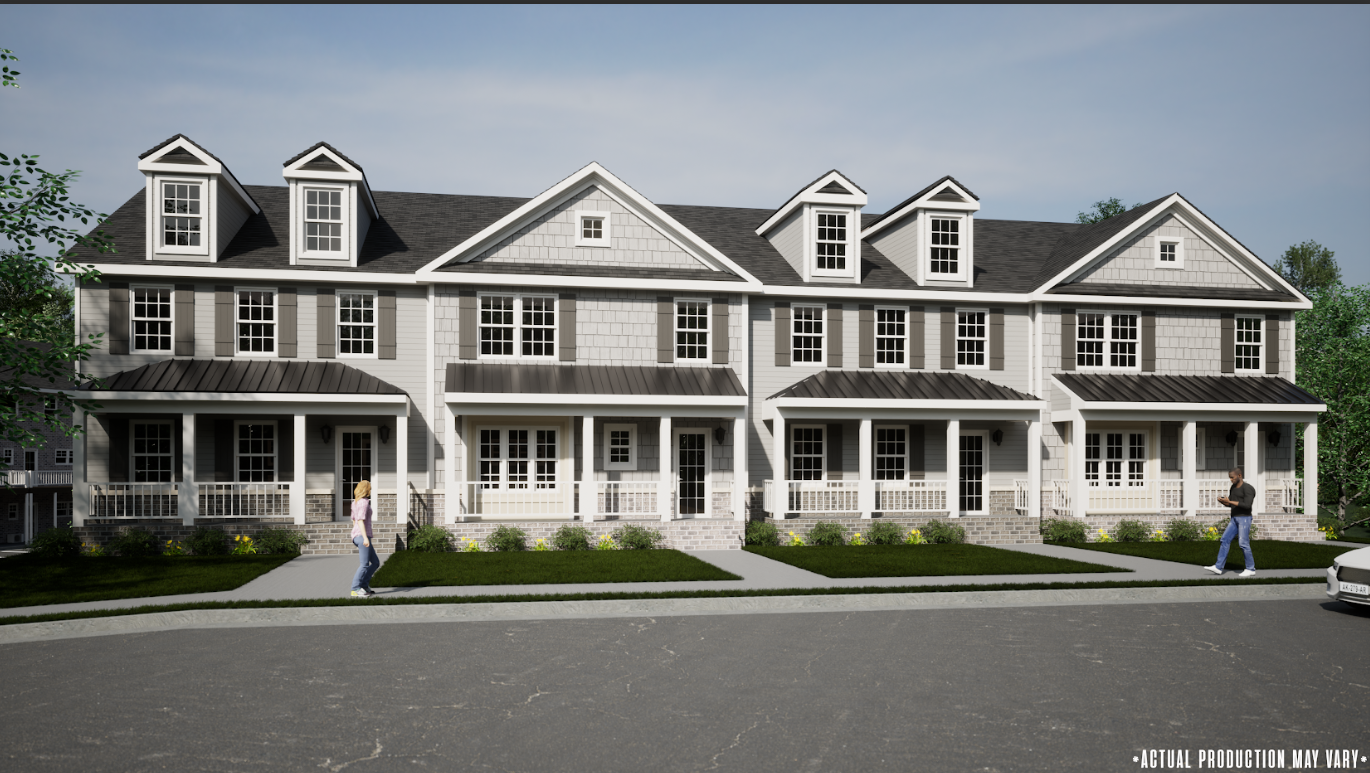
8 quadruplex buildings plus 1 duplex. Total 9 buildings, 34 units.
| 8 Quadruplexes | 4 units each | 192 beds |
| 1 Duplex | 2 units | 12 beds |
| Total | 34 units | 204 beds |
Each unit has individual exterior entry — no interior corridors. 2.5 stories, ~60' × 55' footprint per quadruplex.
Construction and mechanical systems designed for durability, efficiency, and tenant satisfaction.
SIP Option: Structural insulated panels. R-40+ walls, airtight construction. Utility costs 40-60% lower than conventional framing.
Stick Frame Option: Conventional 2×6. R-13 walls. Lower upfront cost, higher operating cost.
NFPA 13R sprinkler system per Georgia code for R-2 occupancies under 4 stories. French door egress from each bedroom provides secondary escape route.
Hot Water: Gas tankless per unit — saves ~$85,000 over 8 years vs electric. Works during power outages.
Backup Power: Generator per building sized for full load. Automatic transfer switch.
Electrical: Master meter per building, all-inclusive rent model.
Building Automation: Home Assistant (open source) — smart thermostats, electronic locks, leak detection. No subscription fees.
Connectivity: Enterprise-grade Wi-Fi per building (816+ devices campus-wide).
Security: Electronic locks with audit trail, video doorbells, parking cameras, perimeter sensors.
- 51 parking spaces (1.5 per unit with approved variance)
- 0.7 miles to Albany State campus
- Private balcony/patio per bedroom
- Covered bike storage (102 spaces)
- Pedestrian paths connecting buildings
- Common gathering area
- No floodplain
6. Budget
Project costs, operating projections, and returns. All figures are preliminary targets subject to contractor pricing, final design, and market conditions.
Target Figures — Not Committed
| Project Summary (Targets) | |
|---|---|
| Buildings | 9 (8 quadruplexes + 1 duplex) |
| Units / Beds | 34 units / 204 beds |
| Total SF | 47,600 SF (~1,400 per unit) |
| National avg cost/bed | $74,000–$98,000 |
| Q-Plex cost/bed | $35,000–$48,000 (36–53% below national) |
Target development cost depends on vertical construction method and systems. Range: $7.2M to $9.7M. Final costs confirmed after contractor bids and design completion.
| Category | Low | High |
|---|---|---|
| Vertical (47,600 SF) | $5,236,000 | $7,140,000 |
| Site work | $600,000 | $700,000 |
| FF&E | $100,000 | $200,000 |
| Hard costs | $5,936,000 | $8,040,000 |
| Soft costs (A&E, permits, fees) | $892,000 | $1,202,000 |
| Contingency (5%) | $341,000 | $462,000 |
| Total Development Cost | $7,169,000 | $9,704,000 |
Land cost not included — to be determined by acquisition.
SIP (structural insulated panels) vs. conventional stick frame affects both construction cost and long-term operating cost.
| SIP | Stick Frame | |
|---|---|---|
| Wall insulation | R-40+ | R-13 |
| Annual utility cost | ~$102,000 | ~$184,000 |
| 10-year utility cost | $1,020,000 | $1,836,000 |
SIP saves ~$82,000/year in utilities. Over 10 years, that's $816,000 — which capitalizes into higher exit value.
General Contractor: BlackStar Construction (Tampa). Marriott-quality commercial work. SBA 8(a), HUBZone, MBE, DBE certified. SIP construction experience.
Procurement: North Star handles materials procurement directly — saves 1.75%–3.5% of TDC ($150K–$295K on this project).
Oversight: Tim Hall on-site supervision. Live webcam. AIA contract documentation.
Projected revenue based on $700/bed/month — conservative for this market (supports $650–$800). Actual performance depends on occupancy, market conditions, and final operating costs.
| Gross potential rent (204 beds × $700 × 12) | $1,713,600 |
| Vacancy (5%) | ($85,680) |
| Effective gross income | $1,627,920 |
| Operating expenses (SIP envelope) | ($535,234) |
| Net Operating Income | $1,092,686 |
Stick frame envelope reduces NOI to ~$1,011,000 due to higher utility costs.
Project value = NOI ÷ Cap Rate. At 7.0% cap rate:
| Envelope | NOI | Exit Value |
|---|---|---|
| SIP | $1,092,686 | $15,610,000 |
| Stick frame | $1,011,086 | $14,444,000 |
Difference between development cost and exit value at 7.0% cap rate.
| Scenario | TDC | Exit Value | Value Created |
|---|---|---|---|
| Low cost, SIP | $7.2M | $15.6M | $8.4M |
| High cost, SIP | $9.7M | $15.6M | $5.9M |
| Low cost, stick | $7.2M | $14.4M | $7.3M |
| High cost, stick | $9.7M | $14.4M | $4.7M |
SIP wins in every scenario — upfront premium recovers through higher NOI and exit value.
Illustrative capital structure for ~$8.4M project (midpoint estimate). Structure and terms to be determined based on owner preference and lender requirements.
| Source | Amount | % |
|---|---|---|
| Construction loan (70% LTC) | $5,880,000 | 70% |
| Equity | $2,520,000 | 30% |
| Total | $8,400,000 | 100% |
After stabilization, refinance to permanent debt.
| Loan amount (65% of $15M value) | $9,750,000 |
| Interest rate | 7.0% |
| Annual debt service | $778,000 |
| Cash flow after debt | $314,686 |
| DSCR | 1.40 |
7. Due Diligence
Items requiring verification before closing.
- Title commitment and search
- Boundary survey
- Easement identification
- Any deed restrictions
- Phase I Environmental Site Assessment
- Geotechnical evaluation
- Utility availability letters
- Stormwater management requirements
- Zoning confirmation letter
- Building permit feasibility
- Impact fee schedule
- Development review process timeline
8. Team
Q-Plex combines Albany-rooted leadership with national development capability. Local knowledge of Albany State University's housing needs and Dougherty County's development landscape—paired with technical systems and financial structuring experience to deliver institutional-quality student housing.
What Makes This Different: Unlike outside developers who build generic product, this team includes local partners with direct relationships to Albany State, the Dougherty County Development Authority, and Southwest Georgia's economic development network. Combined with SIP construction technology, smart building systems, and disciplined cost control, the result is housing that serves students better at lower operating cost.
Demetrius Love serves as Chairman of the Dougherty County Development Authority and CEO of Love HEALS, a nonprofit focused on community building and economic development in Southwest Georgia. He also serves as Director of Finance and Administration at Turner Job Corps Center and CEO of Monopoly House Real Estate.
Prior to his current roles, Love served as IT/Systems Manager at the MillerCoors/Molson Coors Albany Plant and Chief Information Officer for Dougherty County Schools. He holds a Doctorate in Business Administration from California Southern University (in progress), an MPA from Valdosta State University, and a bachelor's degree from Albany State University.
Love is a Certified Public Finance Official (CPFO) and author of seven books including "Love HEALS: The Mechanics of Community Building." His deep roots in Albany and relationships with local institutions make him a key partner for development in Dougherty County.
Michael Hoffman is a U.S. real estate developer, inventor, and affordable-housing strategist with more than three decades of experience delivering complex commercial, residential, and mixed-use projects. As the founder and CEO of North Star Group, Inc., he leads initiatives that combine modular construction, structural insulated panel (SIP) technology, and disciplined financial modeling.
His patent portfolio includes more than a dozen U.S. patents in industrial heating, magnetic insulation, fluid-management systems, tank-farm engineering, and welding technology, demonstrating the systematic technical innovation essential for developing resilient infrastructure and advanced building systems.
Through North Star Group, Hoffman leads the design of sustainable, tech-enabled housing ecosystems integrating SIP-based construction, solar and load-control systems, site-scale rain-garden hydrology, and community-based education models.
Paul Watkins Sr. is President of PMW Management Partners, Inc., with 29 years of experience in residential and commercial development, complex finance structuring, financial analysis, underwriting, and market feasibility. He holds a B.S. in Finance from Hampton University and an MBA from the University of Maryland University College.
Prior to founding PMW, Watkins served as Director of Technical Assistance at Econometrica, Inc., where he led the Housing and Community Development Group. In this role he served as Senior Project Manager and Technical Lead on contracts and cooperative agreements for Public Housing Authorities across the country on behalf of HUD, leading teams in market analysis studies, strategic asset repositioning, and technical assistance for troubled, at-risk, and receivership PHAs.
Under a HUD contract with the Office of Capital Investments, Watkins provided financial analysis, risk mitigation strategies, and commercial finance underwriting evaluation for complex development and modernization transactions submitted by PHAs nationwide. His teams—ranging from two to ten technical experts—delivered capital fund planning, procurement guidance, PHA Board training, and HCV management.
Watkins is a recognized speaker and presenter at national conferences including the Public Housing Authorities Directors Association (PHADA) and the National Association of Housing and Redevelopment Officials (NAHRO).
Jey Smith is the Lead Developer and principal implementation director for North Star Group. As a partner at North Star Group, Inc., he coordinates the full development framework across land planning, stakeholder integration, engineering alignment, and multi-phase execution.
Smith brings more than fifteen years of experience in high-level telecommunications operations with Verizon Business/MCI, where he managed multimillion-dollar portfolios serving clients such as Sprint, T-Mobile, and Verizon. His fifteen years of military service further reinforce his structured operational style: disciplined planning, logistics awareness, and stable command-level decision-making.
Timothy V. Hall brings more than 40 years of experience in federal, institutional, and faith-based construction, with a professional background that spans HUD housing upgrades, U.S. Army Reserve facility improvements, GSA building work, and VA Hospital modernization.
Tim Hall has long served in roles requiring precise cost estimating, contractor oversight, and schedule management. He is a certified Construction Quality Control (CQC) Manager and a certified Safety Officer, ensuring that all field work aligns with federal construction requirements, ICC standards, and the complex documentation demands associated with public-sector facilities.
Tom Dowling is a civil engineer, developer, and manufacturing innovator with nearly five decades of construction experience. He currently serves as CEO of Supreme Insulated Panel Systems, producing high-performance Magnesium Oxide SIPs certified for hurricane resistance, fire safety, and net-negative carbon impact.
Tom began his career at The Whiting-Turner Contracting Company, managing $40M in highway and bridge projects. He went on to found Metropolitan Contracting Co., delivering over $120M in large-scale commercial, industrial, and hospitality construction.
Through Dowco Management Co., Tom owns and operates more than 920 residential units. His portfolio spans engineering, property development, and SIPs manufacturing.
Les Allen Jr. is the CEO and founder of The BlackStar Companies, which includes BlackStar Construction and BlackStar SIPs. Based in Tampa, Florida, the company specializes in construction services and structural insulated panel (SIP) manufacturing. BlackStar holds multiple certifications including SBA 8(a), HUBZone, MBE, and DBE status.
9. Action Plan
Next steps from current state through construction.
First step is a sit-down with the landowner to walk through the project together. Paul Watkins, Jey Smith, and Michael Hoffman from North Star. Possibly Les Allen from BlackStar on the call.
Make sure everyone understands and agrees on what we're building and how we're building it. Review the elements, adjust as needed, confirm we're all looking at the same picture.
- Project scope — 34 units, 204 beds, 9 buildings
- Construction approach — BlackStar as GC, North Star procurement and oversight
- Building envelope — SIP construction, manufacturer pricing
- Budget range and cost drivers
- Timeline expectations
- Owner preferences on bonding, if any
Shared understanding of the project. Agreement on approach. Clear enough to move into development agreement and team assembly.
Identifying and engaging the right people for each role. Some positions filled, others need local sourcing.
| Role | Person / Firm | Responsibility |
|---|---|---|
| Developer | North Star Group | Overall project delivery |
| Landowner Liaison | Paul Watkins | Primary contact for legal, finance, construction matters |
| Project Manager | Jey Smith | Day-to-day operations, team coordination |
| Construction Manager | Tim Hall | Physical outcome, superintendent oversight |
| General Contractor | Les Allen / BlackStar | Construction execution |
| Structural Engineer | Tom Dowling | Foundation, framing, SIP detailing |
Architect: Need someone with curb appeal instincts — layout and exterior design affect rentability and resale. Option to use offshore architects for schematic and design development phases to manage cost, then bring in local architect for construction documents. Preferably Albany-based with multifamily experience. Worth checking who did recent ASU campus work.
Civil Engineer: Site plan, grading, utilities, stormwater. Local firm preferred for permitting relationships.
MEP Engineer: Mechanical, electrical, plumbing systems. Can be remote but needs coordination with architect.
Tim Hall supervises the on-site superintendent. Jey Smith provides backup — both travel, so coverage is shared. Les Allen on site periodically. Michael Hoffman as needed. Webcam provides continuous visibility.
After the kickoff meeting and team alignment, we produce a straightforward contract outlining scope, roles, and fees.
Development agreement covers what North Star is doing and how we get paid. Fees are lighter during pre-construction — approximately $10,000/month — with substantial work delivered during that period.
Full development fee structure to be discussed after kickoff meeting confirms scope and approach.
- Gantt chart — visual timeline for all parties
- Microsoft Project schedule — detailed task-level planning, maintained by project manager
- Procurement specifications — assembling the pieces we're specifying
- Consultant coordination — architect, civil, MEP engagement
- City coordination — pre-development meetings, permit pathway
Site confirmation and city coordination before design begins.
- Phase I Environmental — no issues
- Sewer capacity — confirmed by Planning
- Zoning — 34 units / 204 beds within limits
- Height — 2.5 story allowed
- Parking — variance to 1.5/unit approved
- No flood plain
- No traffic study required
- Geotechnical report — soil conditions, foundation recommendations
- Boundary and topographic survey
- Title commitment — verify clean title
Meet with Planning and Building departments before submitting. Confirm permit pathway, identify any concerns early. Goal is buy-in and smooth approval — no surprises, no opposition.
Good sketches, good ideas, and a solid team presentation prevent problems down the road.
Architectural and engineering drawings through construction documents.
Building footprints, unit layouts, site arrangement. Confirms program fits site and zoning. Exterior concepts that support curb appeal.
Duration: 4-6 weeks
Option: Offshore architect for cost efficiency at this phase.
Detailed floor plans, building sections, exterior elevations. MEP systems sized and routed. Structural system confirmed with Tom Dowling.
Duration: 6-8 weeks
Permit-ready drawings with full specifications. This phase benefits from local architect familiar with Albany permitting.
Duration: 8-10 weeks
Regulatory approvals required before construction.
City of Albany Planning Department review. Zoning already confirmed — this is administrative approval of the specific site plan.
Duration: 4-8 weeks depending on city backlog
Building department review of construction documents. Fire Marshal review for NFPA 13R sprinkler compliance.
Duration: 4-6 weeks
- Water tap
- Sewer connection
- Electrical service
- Gas service
- Stormwater permit
Site work through certificate of occupancy. BlackStar as GC, Tim Hall overseeing superintendent, AIA contract documentation throughout.
Clearing, grading, erosion control, underground utilities, foundation preparation.
Duration: 6-8 weeks
Foundation, SIP erection, roofing, MEP rough-in, insulation, drywall, finishes. Nine buildings constructed in sequence.
Duration: 10-14 months
Parking lot paving and striping, sidewalks, landscaping, site lighting, bike storage.
Punch list, final inspections, certificate of occupancy, as-built drawings, warranty documentation.
Marketing and occupancy through stabilization.
Begin marketing 90-120 days before completion. Target 30-50% pre-leased before first move-in. Coordinate with ASU academic calendar — August move-in aligns with fall semester.
Select and onboard property manager before lease-up begins. Train on building systems — Home Assistant, electronic locks, maintenance reporting.
Target: 95%+ occupancy within 6 months of completion. 204 beds in a market with 4,000+ off-campus students.
10. Development Agreement
Development services and fee structure.
This fee delivers a 204-bed student housing project with SIP construction (R-40+ walls, 40-60% lower utility costs), smart building systems (automated HVAC, electronic locks, leak detection), enterprise-grade security and connectivity, gas tankless water heating, and backup generators. Private bathrooms, 10-foot ceilings, French door balconies throughout.
Total development cost at or below conventional stick-frame construction without these features.
| Development | 6% of TDC |
| Procurement | 1% of TDC |
| Oversight | 1% of TDC |
| Total | 8% of TDC |
Jey Smith coordinates architect, engineer, contractor, and city. AIA documentation. Contract administration, change orders, pay applications.
Tim Hall supervises construction. Federal construction background.
North Star handles procurement. Owner purchases materials direct and furnishes to contractor. Contractor bids labor only.
| Materials budget (estimated) | $3,500,000 |
| Typical GC markup | 10-20% |
| Markup avoided | $350,000 – $700,000 |
| Procurement fee (1% of TDC) | ~$84,000 |
SIP construction, smart systems, efficient utilities. Comparable cost to standard stick-frame without those features.
Based on estimated TDC of $8.4M, total development fee is approximately $672,000. Paid at milestones with 15% holdback until certificate of occupancy.
| Signed development agreement | 5% | $33,600 |
| Covers proposal work, site analysis, initial coordination. | ||
| Site plan submitted | 10% | $67,200 |
| A/E coordination, zoning confirmation, site plan development. | ||
| Building permit issued | 15% | $100,800 |
| Permit application, utility coordination, plan revisions. | ||
Pre-construction total: $201,600
| Monthly draws | 55% | $369,600 |
| Contract administration, pay application review, site oversight, procurement management. Invoiced monthly pro-rata with construction progress. | ||
| Certificate of occupancy | 15% | $100,800 |
| Released when building passes final inspection. Lease-up is owner responsibility — not a condition of payment. | ||
Ready to Discuss?
Contact North Star Group to explore this opportunity.
Get in Touch